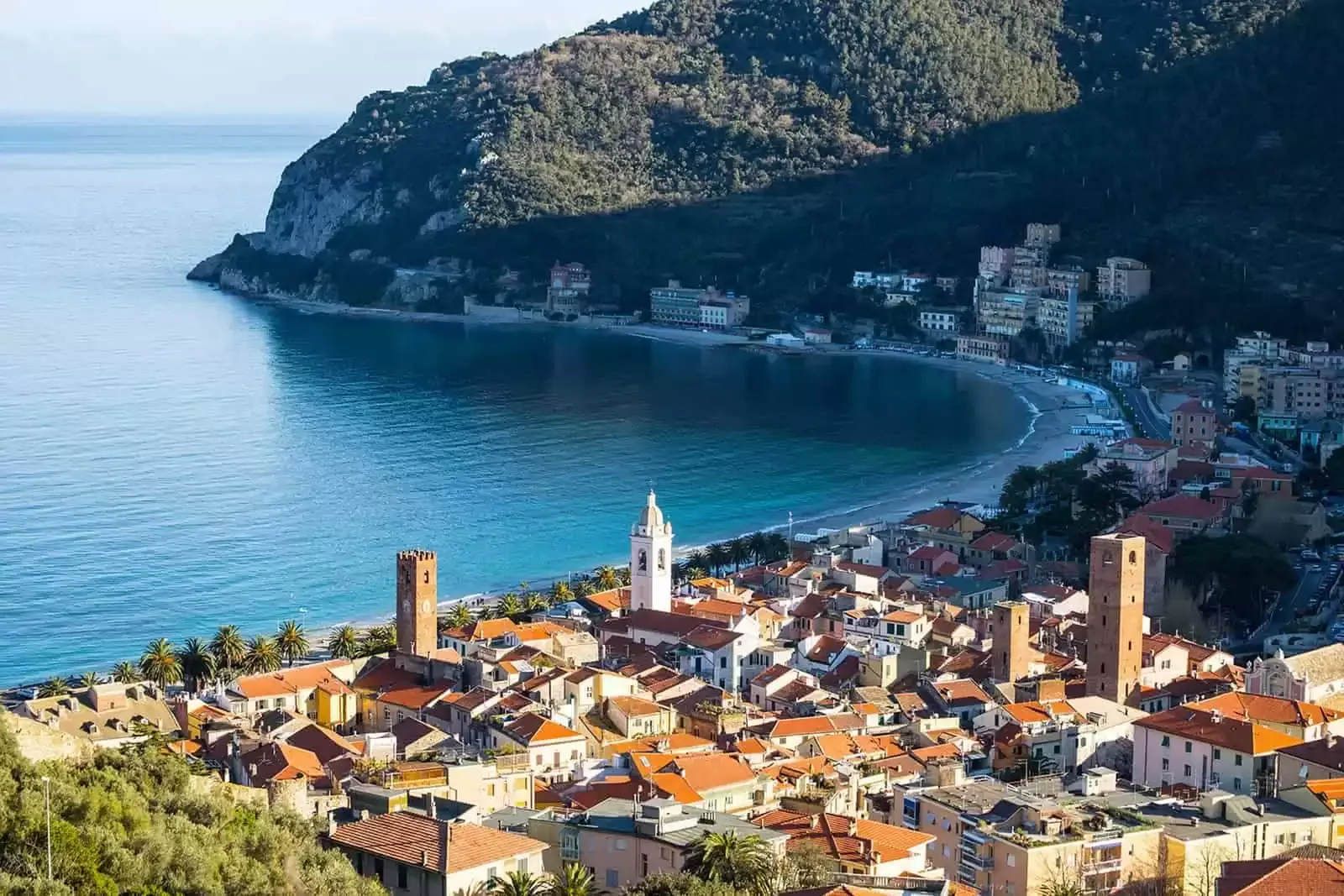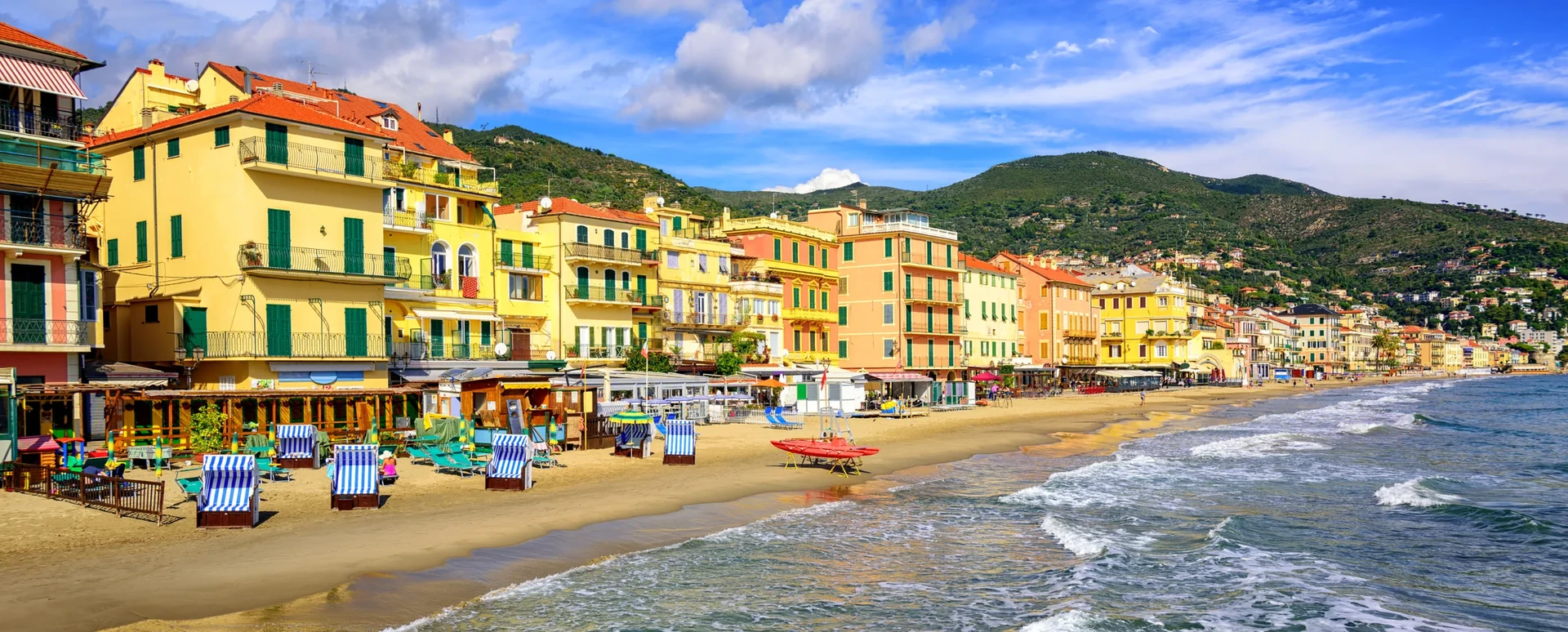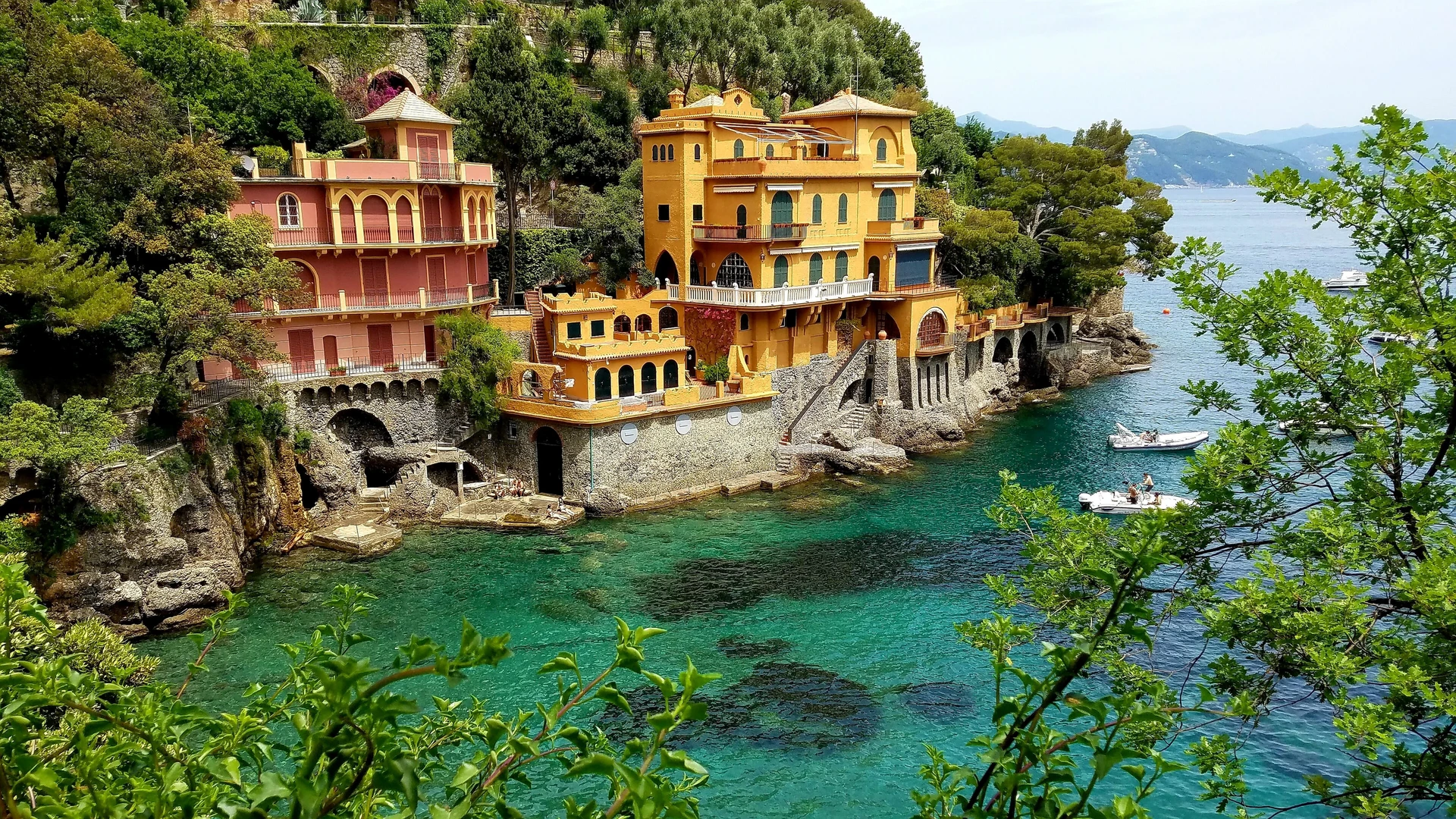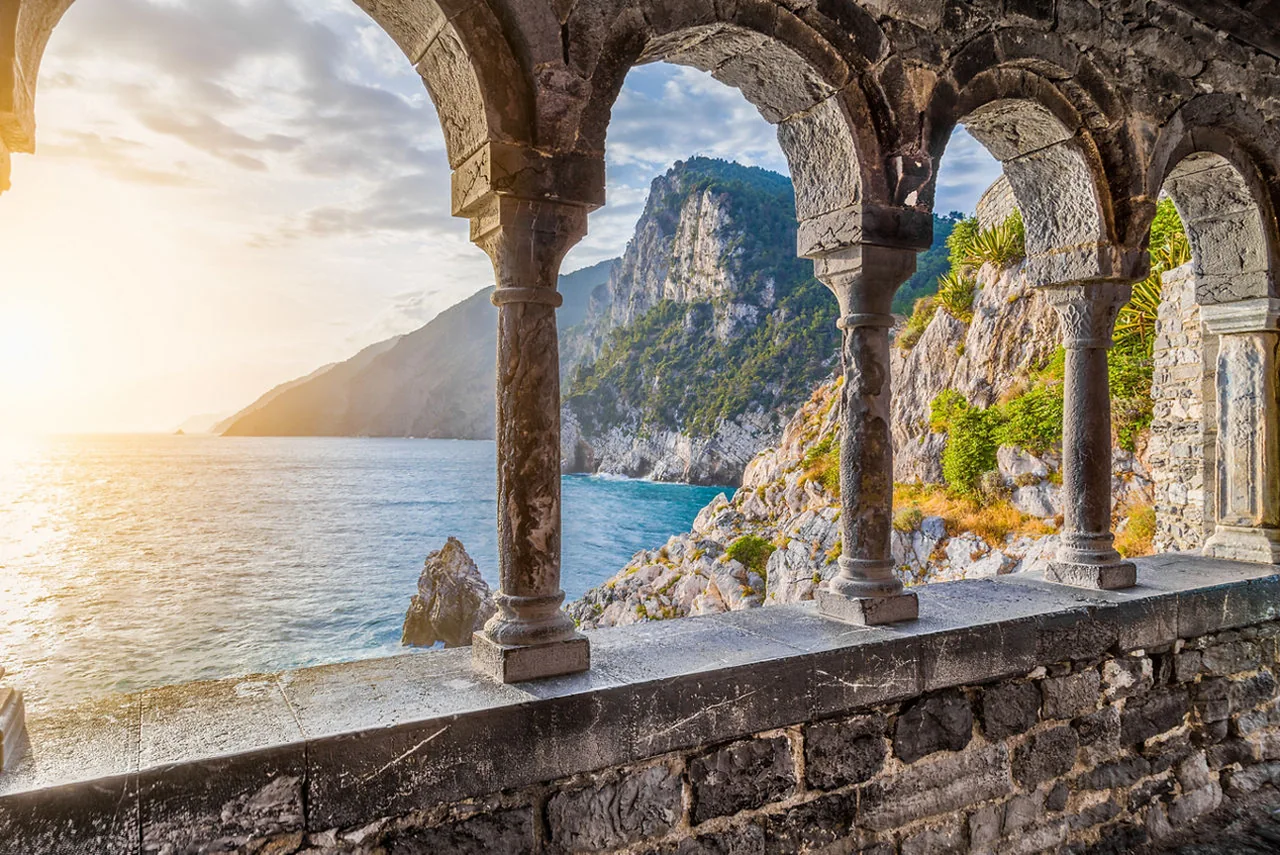

Liguria is a long strip of coast squeezed between the sea and the mountains, and this makes it a region where you move around in a particular way: almost everything runs along a single axis parallel to the sea. Understanding how to get there and how to get around is the key to enjoying it at its best, and the good news is that a car often isn’t needed — indeed it can be a hindrance. Here’s the practical guide, means by means. If you’re already choosing your destination, take a look also at where to stay in Liguria.
By train: the backbone of the region
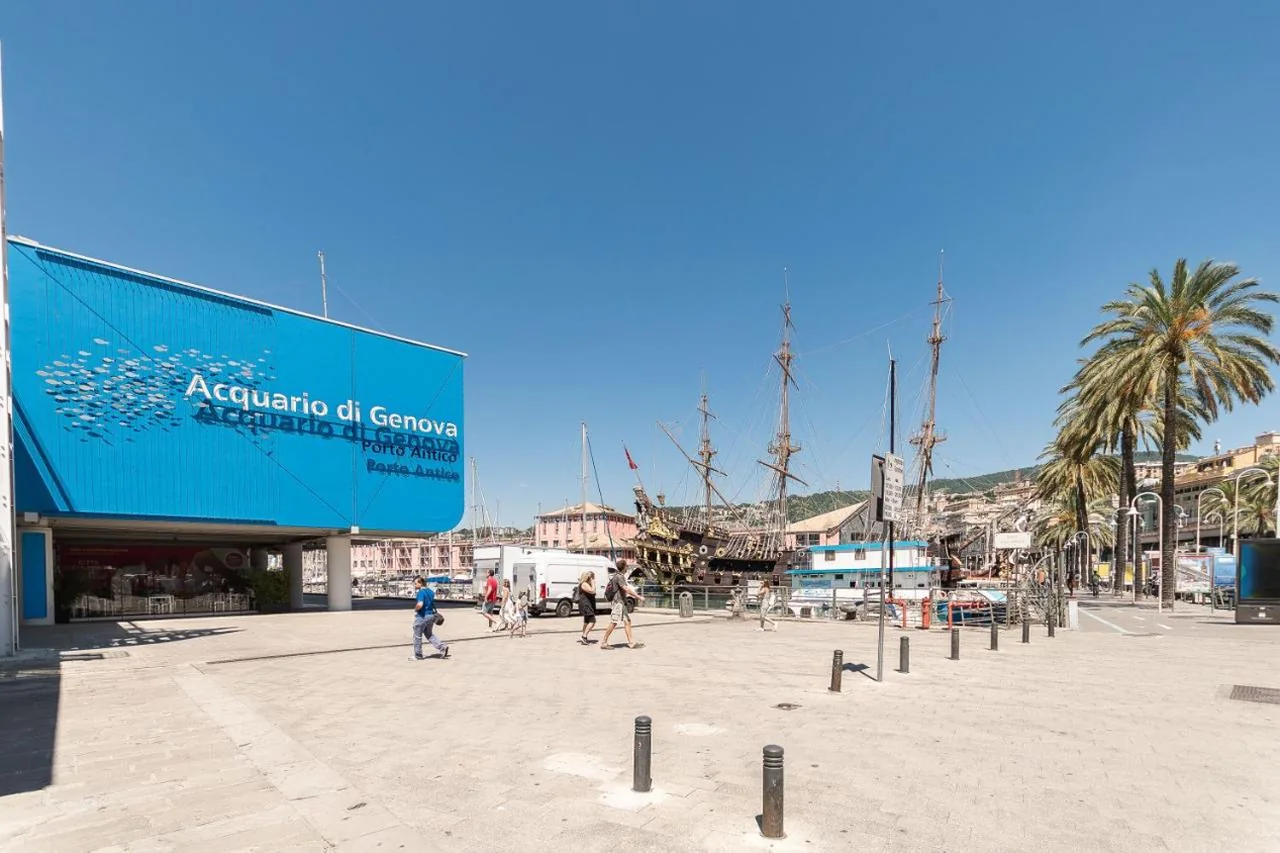
The train is the real protagonist. The coastal railway runs almost unbroken along the whole region, from Ventimiglia to Genoa to La Spezia (and beyond, towards Pisa and Rome), stopping at most towns: Sanremo, Imperia, Savona, Finale Ligure, Genoa, Rapallo, Santa Margherita, Sestri Levante, the Cinque Terre and La Spezia. Regional trains are frequent and link the villages just minutes apart.
It’s the most convenient, cheapest and fastest way to move along the coast, avoiding traffic, queues and the hunt for parking. The beauty is that almost every village has its station a couple of steps from the sea and the centre, so you step off the train and you’ve already arrived. For the Cinque Terre there’s a dedicated service, the Cinque Terre Express, which links La Spezia and Levanto, stopping at all five villages with very frequent runs in high season; the Cinque Terre Card in its train version covers unlimited rides on the stretch, with fares that vary by season and demand. Genoa has two main stations, Piazza Principe and Brignole, well connected with Milan, Turin and the rest of Italy.
A practical tip: in high season it’s worth buying tickets in advance, online or at the machines, to avoid queues at the counters, and checking for any national strikes, which can happen in Italy. Otherwise, travelling by train along the Riviera is a pleasure for the eyes too, between tunnels and sudden openings onto the sea.
By plane
The reference airport is Genoa “Cristoforo Colombo”, a few minutes from the city centre and connected to the rest of the region by train and bus. Depending on your destination, though, nearby airports can also be handy: Nice Côte d’Azur is very close to the far west (Sanremo, Bordighera), while Pisa and the Milan airports (Malpensa, Linate, Bergamo) serve the east and the centre of the region well. From all of them you carry on comfortably by train along the coast, often with a single change at Genoa: for a trip from abroad, a flight to one of these airports plus the train is the simplest, most efficient combination.
By car
Liguria is served by a dense motorway network that follows the coast and the passes towards the interior: the A10 (Ventimiglia–Genoa, the “Autostrada dei Fiori”), the A12 (Genoa–Sestri Levante–La Spezia–Livorno), the A7 (Genoa–Milan), the A26 (Genoa–Gravellona) and the A6 (Turin–Savona), the sea outlet for the Piedmontese. They’re scenic roads, but winding and full of tunnels and viaducts.
A useful warning: in recent years roadworks on the Ligurian motorways have caused delays; the situation has much improved for summer 2026, with most works suspended in the peak months, but it’s still worth checking the traffic situation in advance before setting off, especially at weekends. In many destinations, too, the car should be left at the hotel or in a car park: in the Cinque Terre and Portofino the villages are pedestrian and spaces scarce and expensive.
By ship and by boat
Liguria is also reached and discovered by sea. Genoa is one of the great passenger ports of the Mediterranean, a cruise home port and a ferry hub for Sardinia, Sicily and Corsica; Savona (Vado Ligure) is an important cruise and ferry port too. Those arriving or departing by ship will find the maritime stations a couple of steps from the centre.
On the spot, then, the tourist boats are often the loveliest way to get around: in the warm season they link the villages of the Cinque Terre, Portofino and the abbey of San Fruttuoso, the Gulf of Poets with Portovenere, and the Golfo Paradiso. Seeing these places from the sea, avoiding queues and crowded trails, is an experience in itself.
Getting around, often without a car
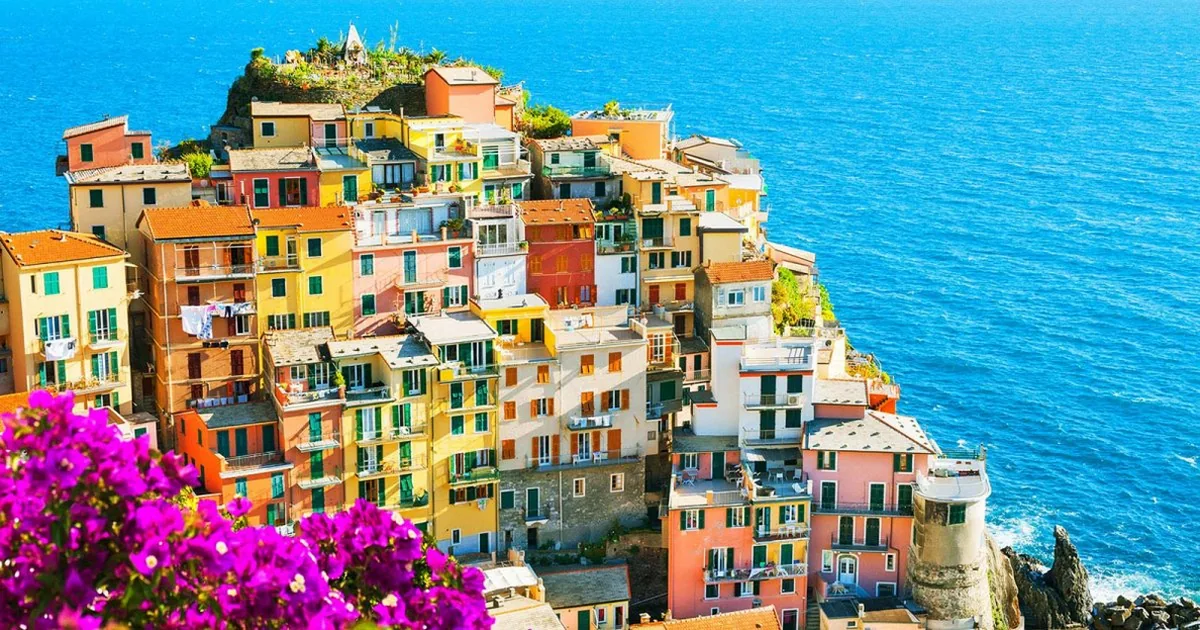
The basic advice is simple: choose a base well connected by the railway and get around by train. That’s how you avoid the coast’s typical problems — narrow roads, restricted-traffic zones, impossible parking — and move comfortably from one village to the next. In the Cinque Terre and Portofino a car is strongly discouraged: the former is entirely pedestrian, the latter has a permanent ZTL and very expensive spaces.
In the west, between Ospedaletti, Sanremo, Imperia and San Lorenzo al Mare, there’s a splendid cycle path along the sea, laid on the old railway: it’s a relaxing, car-free way to move along the Riviera of Flowers. One last practical note: the historic tunnel road between Sestri Levante and Moneglia is currently closed for works, so for Moneglia it’s best to arrive by train. To choose where to stay, see the guide where to stay in Liguria, with all the areas and destinations.
Ready to choose your base? Browse all the small hotels in Liguria, chosen one by one.
Frequently asked questions
Quick answers to the questions we’re asked most often about how to get to and around Liguria.
What is the best way to get around Liguria?
The train, without a doubt. The coastal railway links almost all the villages and cities from Ventimiglia to La Spezia, with frequent runs, and it’s convenient, cheap and fast. It lets you avoid traffic and parking, a real problem in the Cinque Terre and Portofino. In several areas there are also scenic boats and seaside cycle paths.
Do you need a car to visit Liguria?
Often not — indeed it can be a hindrance. On the coast the train does it all, and in the Cinque Terre and Portofino a car is discouraged, between pedestrian villages, restricted-traffic zones and pricey parking. A car is only useful for exploring the hinterland or the few less connected spots. Otherwise, it’s best left at the hotel.
What is the nearest airport to Liguria?
The main airport is Genoa “Cristoforo Colombo”, close to the centre and well connected. Depending on your destination, though, Nice (for the far west, Sanremo and Bordighera), Pisa and the Milan airports are handy for the east too. From all of them you carry on easily by train along the coast.
How do you get to the Cinque Terre?
By train: from La Spezia station the Cinque Terre Express reaches all five villages in a few minutes, with very frequent runs in high season. The Cinque Terre train Card covers unlimited rides. In summer there are also boats (except to Corniglia). A car, instead, is strongly discouraged, because the villages are pedestrian.