Veneto, in the heart of Italy’s North-East, is among the most accessible and best-connected regions in the country: reachable from all over the world by air, from Italy and Europe by train and by car, and superbly served internally. Whether you want to visit Venice, relax on Lake Garda, ski in the Dolomites or enjoy the Adriatic coast, the journey is simple: here you will find every option for arriving and practical tips for reaching the main destinations.
By air: Veneto’s three airports
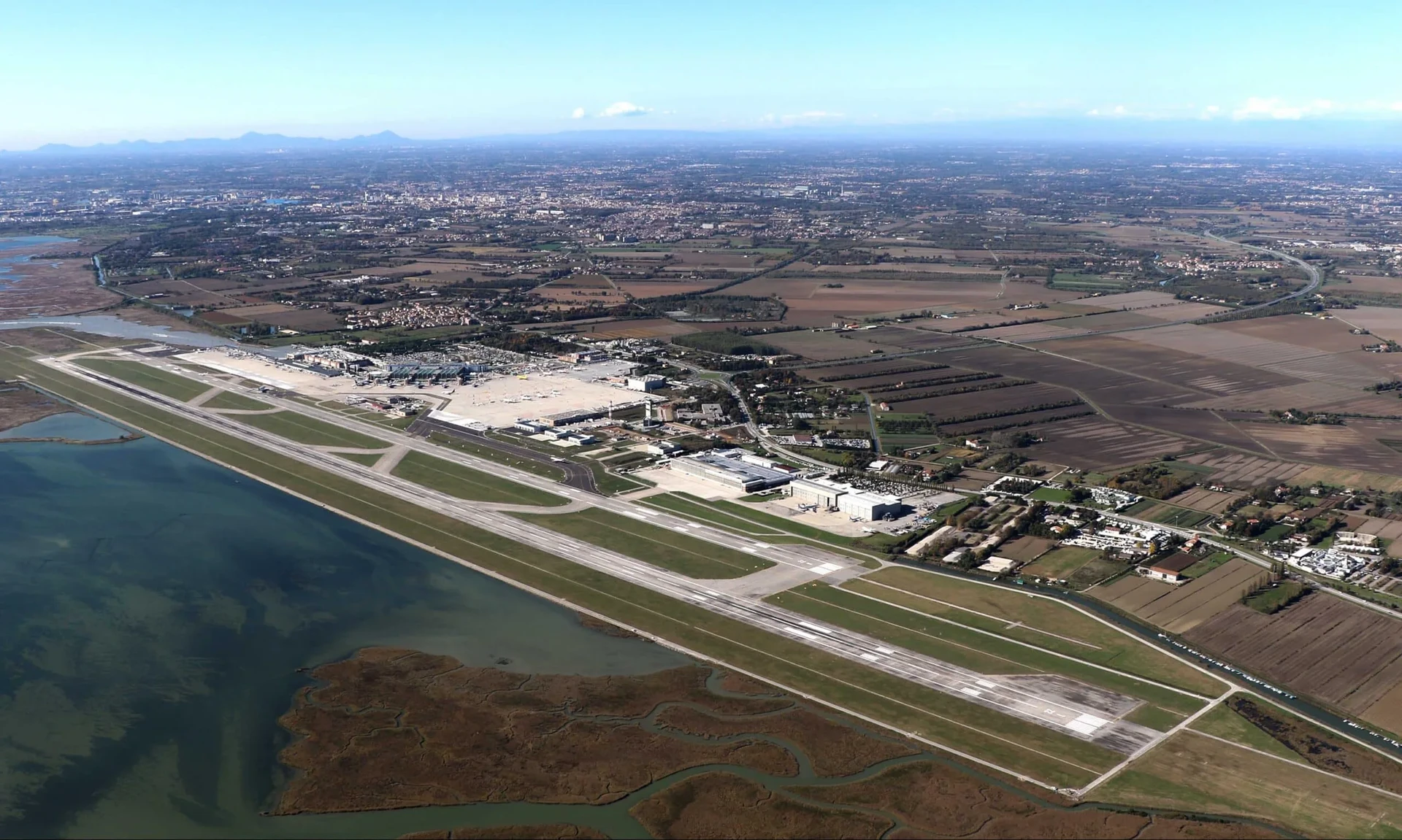
Veneto is served by three airports. Venice Marco Polo is the main hub of the North-East, with domestic and international flights: it lies about ten kilometres from the centre of Venice, reached by express buses (ATVO and ACTV) to Piazzale Roma in roughly 20-25 minutes, or by Alilaguna motor launches that cross the lagoon to St Mark’s and the islands. Treviso (Antonio Canova) is the low-cost carriers’ airport, handy for Venice (about 30 km) thanks to direct buses. Verona (Valerio Catullo) serves the western part of the region, with a shuttle to Porta Nuova station, and is ideal for Lake Garda.
To these you can add, just outside the region, Bologna airport, convenient for those arriving from the south. Thanks to this network, Veneto is one of the most convenient gateways in Europe, with frequent connections to every tourist destination in the region.
A practical tip: choose the airport based on your final destination, not just on the price of the flight. If you are heading to Venice and the art cities, Marco Polo and Treviso are the handiest; if your goal is Lake Garda or Verona, land at Verona; for the Dolomites, Venice is the most logical starting base. All the airports have car hire on site and frequent public connections, so you can organise your arrival stress-free at any hour.
By train: high-speed rail and regional services
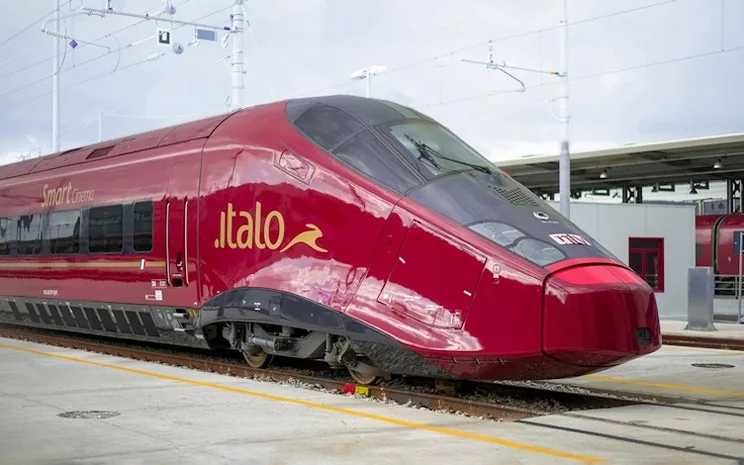
The train is often the best way to reach Veneto and to move between its cities. The region is crossed by the high-speed Turin-Milan-Venice line, with stops at Verona Porta Nuova, Vicenza, Padua and Venice (Mestre and Santa Lucia): Frecce and Italo services connect these cities to Milan, Rome, Bologna and Florence in a few hours. The wonderfully convenient Venice Santa Lucia station sits right in the historic centre, on the Grand Canal, and is the most practical way to arrive in the lagoon while avoiding traffic.
From these stations a dense network of regional trains then reaches almost every destination: Peschiera del Garda on Lake Garda, Conegliano for the Prosecco Hills, the Euganean Spas for the hills, Treviso, Bassano del Grappa, Belluno and Calalzo di Cadore for the Dolomites. For the art cities and for Venice, the train is nearly always the smartest, fastest and most worry-free choice, with no parking to think about.
Veneto is also well connected internationally: international trains leave Venice and Verona for Austria and Germany over the Brenner Pass, and the region sits on the corridor linking Italy to Eastern Europe. Travellers from Northern Europe can therefore reach Veneto comfortably by rail. One useful detail for Venice: the city has two stations, Santa Lucia (in the historic centre) and Mestre (on the mainland); always check which one serves your train so you can plan the final leg properly.
By car: the motorways
Those arriving by car will find a dense motorway network. The main axis is the A4 Turin-Milan-Venice-Trieste, the “backbone” of the North that crosses the whole region touching Verona, Vicenza, Padua and Venice. From the north the A22 Brenner motorway descends, meeting the A4 at Verona; from the south the A13 Bologna-Padua climbs up. For the mountains there is the A27 Venice-Belluno, heading towards the Dolomites, while the A31 Valdastico links Vicenza northwards.
The car is convenient for exploring the territory freely, especially the wine hills, the Dolomites and the areas less served by trains. Bear in mind, however, that Venice cannot be reached by car: vehicles are left in the car parks of Piazzale Roma or Tronchetto, and from there you continue on foot or by vaporetto. The historic centres of the art cities are also largely pedestrian, with limited-traffic zones: in these cases it is best to use the train and public transport.
If your itinerary is mixed — one city as a base with a few day trips — a good strategy is to arrive by train, get around on foot and by public transport in the city, and hire a car only for the out-of-town stops that truly require it, such as the hillside wineries or the Dolomite valleys. Many hotels in the historic centres have no car park of their own and rely on partner garages: if you arrive by car, always check availability and the cost of the space in advance.
How to reach Venice, Garda, the Dolomites and the coast
Once in Veneto, getting around is simple. Venice is reached by train to Santa Lucia, right in the centre, or by bus and motor launch from the airports; by car you can only get as far as Piazzale Roma or Tronchetto. Lake Garda, on the Veneto shore, is served by the station of Peschiera del Garda on the Milan-Venice line, and is half an hour from Verona; once there, the ferries link the villages better than the car does.
The Dolomites of Cortina and Belluno are reached by car along the A27, or by train to Belluno or Calalzo di Cadore and then by bus; in winter there are shuttles from Venice and the airports. The beaches of the Adriatic — Jesolo, Caorle, Bibione — are reached by car from the A4 or by bus from Venice, San Donà di Piave and Portogruaro. The wine hills — Prosecco, Valpolicella and the Euganean Hills — and art cities such as Padua, Vicenza and Treviso are all conveniently connected by train and by car, perfect for an itinerary.
A final tip is to plan your trip thinking not only about arriving but also about daily travel. Veneto is compact: from Venice you reach Verona in just over an hour by train, Padua in a quarter of an hour, Garda in about ninety minutes. This means you can choose a single base — perhaps a well-connected art city like Padua, Verona or Vicenza — and from there visit much of the region with day trips, alternating the train for the cities with a hire car for the hills and the mountains. Always check the timetables of regional trains, which can be reduced on public holidays, and consider the integrated fares and local tourist cards, which often include public transport and museum entry for considerable savings.
This guide is part of our journey through the region: discover every zone and destination in Where to stay in Veneto.
Frequently asked questions
Quick answers to the questions we are asked most often about how to get to Veneto.
Which is the best airport for reaching Veneto?
It depends on where you are coming from and your destination. Venice Marco Polo is the main hub of the North-East, ideal for international flights and for reaching Venice and the central-eastern part of the region. Treviso is the low-cost airport, also handy for Venice. Verona is the most convenient for Lake Garda and the western area. To the south, Bologna airport is a valid alternative. The choice depends on the zone you want to visit.
How do you get to Venice from Marco Polo airport?
From Marco Polo airport you reach Venice by the ATVO and ACTV express buses, which arrive at Piazzale Roma in about 20-25 minutes, or by the Alilaguna motor launches, which cross the lagoon to St Mark’s and the islands in around an hour. Alternatively there are private water taxis, more expensive but scenic. There is no railway station at the airport: the train is taken at Venice Mestre or Santa Lucia, both linked to the airport by bus.
Is it worth reaching Veneto by train?
Yes, very much so, especially for Venice and the art cities. Veneto is crossed by the Milan-Venice high-speed line, with stops at Verona, Vicenza, Padua and Venice, connected in a few hours to Rome, Milan and Bologna. Venice Santa Lucia station is right in the historic centre. From these stations a dense network of regional trains reaches Garda, the hills and the Dolomites. The train avoids traffic and parking problems.
Can you reach Venice by car?
By car you can only get as far as Piazzale Roma or Tronchetto, the only points of Venice reachable on wheels, where you leave the vehicle in garages and car parks. From there you continue on foot or by vaporetto along the Grand Canal. The historic centre of Venice is entirely pedestrian and car-free. For this reason, to visit Venice, the train or the airport transfers are nearly always more convenient than the car.
How do you reach the Veneto Dolomites?
The Dolomites of Cortina and Belluno are reached mainly by car, along the A27 Venice-Belluno motorway and then the mountain roads. Alternatively, you arrive by train to Belluno or Calalzo di Cadore and continue by bus towards Cortina and the other resorts. In winter there are direct shuttles from Venice and the airports. By car, in the cold season, remember the compulsory winter equipment and the condition of the passes.
How do you reach Lake Garda from Veneto?
The Veneto shore of Lake Garda is extremely convenient: Peschiera del Garda has a station on the Milan-Venice railway, and Verona with its airport is half an hour away. By car you arrive from the A4 motorway (Peschiera or Sommacampagna exit) and from the A22 Brenner motorway. Once on the lake, the ferries and cycle paths let you move between the villages while avoiding the traffic of the lakeside road, often heavy in summer.