
Tuscia is the Lazio almost no one expects: Etruscan villages, volcanic lakes, clay badlands and Renaissance gardens, barely an hour from Rome yet a world away from its crowds. It’s a land of country houses, farm stays and small guesthouses rather than big hotels — and that’s exactly why it rewards those who stay the night. Here are the best bases to do it, with the small addresses we hand-pick one by one, never by hearsay.
It’s no longer just a day trip: the province of Viterbo now gathers around 1.4 million overnight stays a year and an average stay of 4.2 nights, above the Lazio average, with international visitors rising fast. In plain terms: more and more travellers choose to stay, not to pass through.
One practical warning up front: here a car makes all the difference. The villages are close together but scattered, and having your own wheels is what turns a stay into a real itinerary of wine, water and stone.
Bagnoregio and Civita: the dying town, all yours after dark
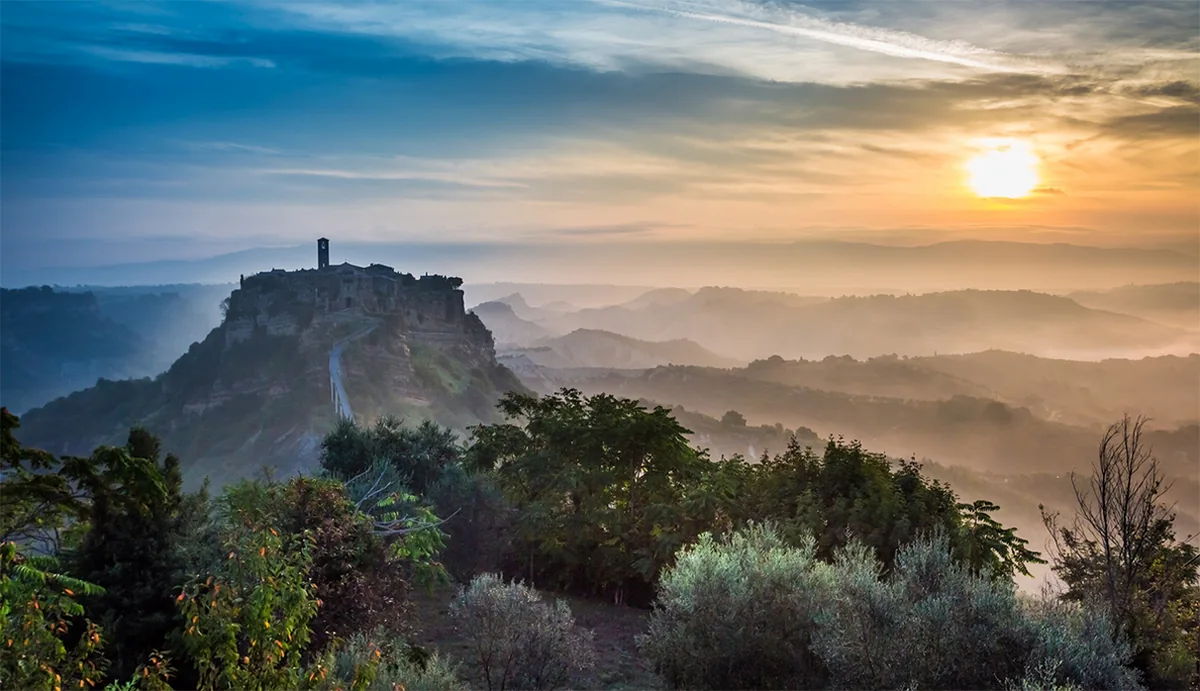
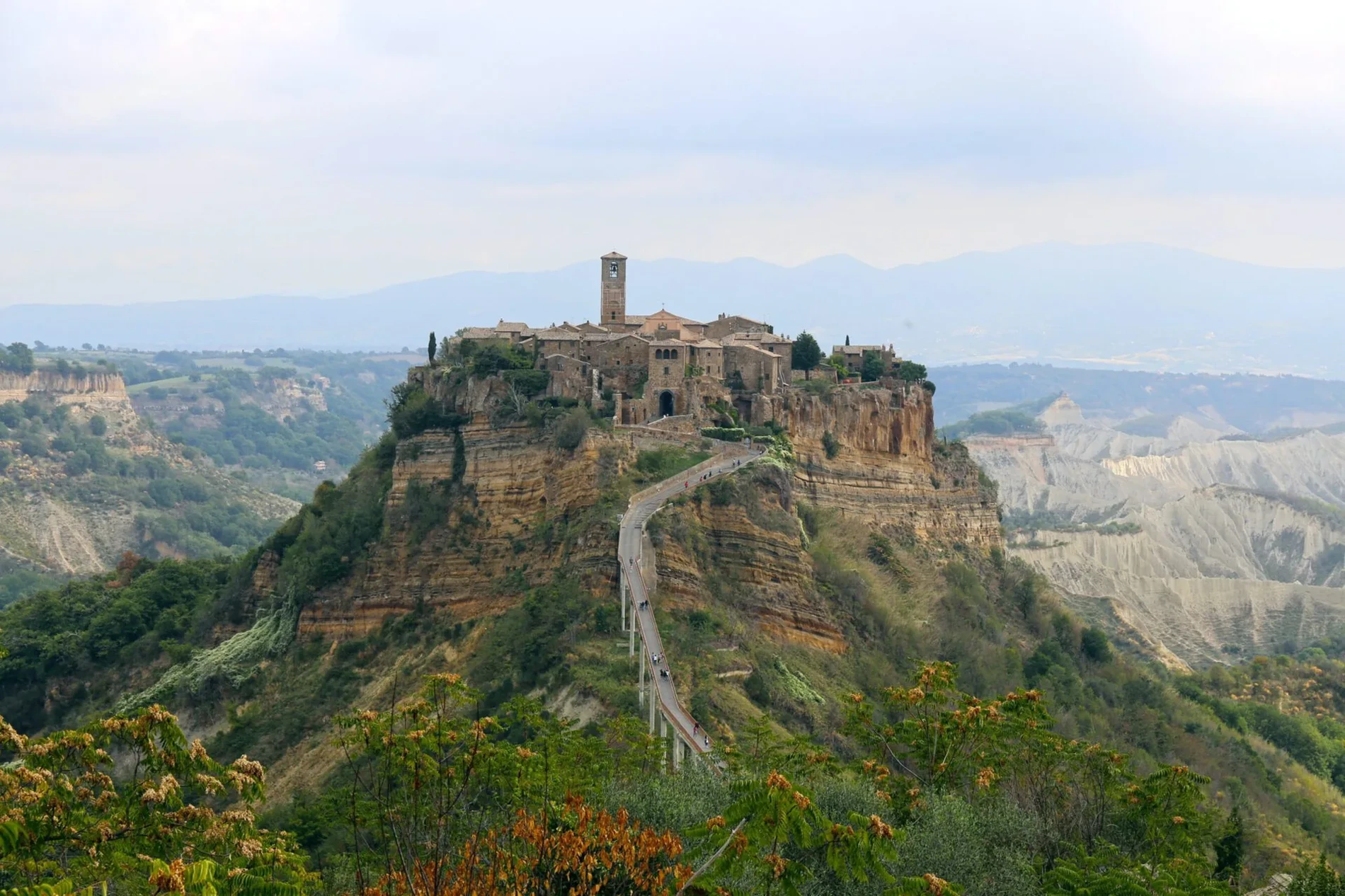
Civita di Bagnoregio, perched on the crumbling clay and reachable only by a long footbridge, is the magnet of Tuscia: it has passed a million entry tickets in a year, with peaks of over 11,000 visitors in a single weekend.
By day it’s a river of people. But those who sleep in Bagnoregio cross the bridge at dawn or dusk, when the coaches have gone and only the wind and the badlands remain: it’s the very reason to stop here for a night instead of passing through.
The village is small and its places have few rooms: book early, and factor in the Civita ticket and a parking spot. The two we choose a step from the bridge:
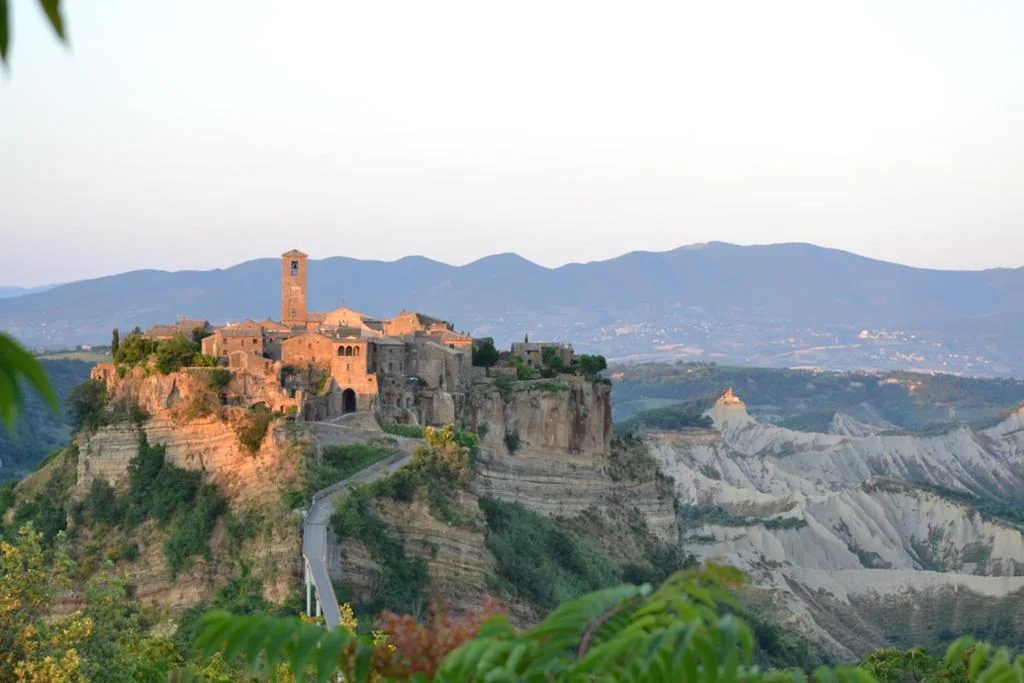
Corte della Maestà Antica Residenza
In the heart of Bagnoregio, a few steps from the bridge to Civita, an old residence turned charming retreat: tastefully furnished suites, a snug garden and the village’s silence the moment the coaches leave. It’s the address to live Civita properly, at your own pace. The most romantic choice in the area, for a couples’ escape.
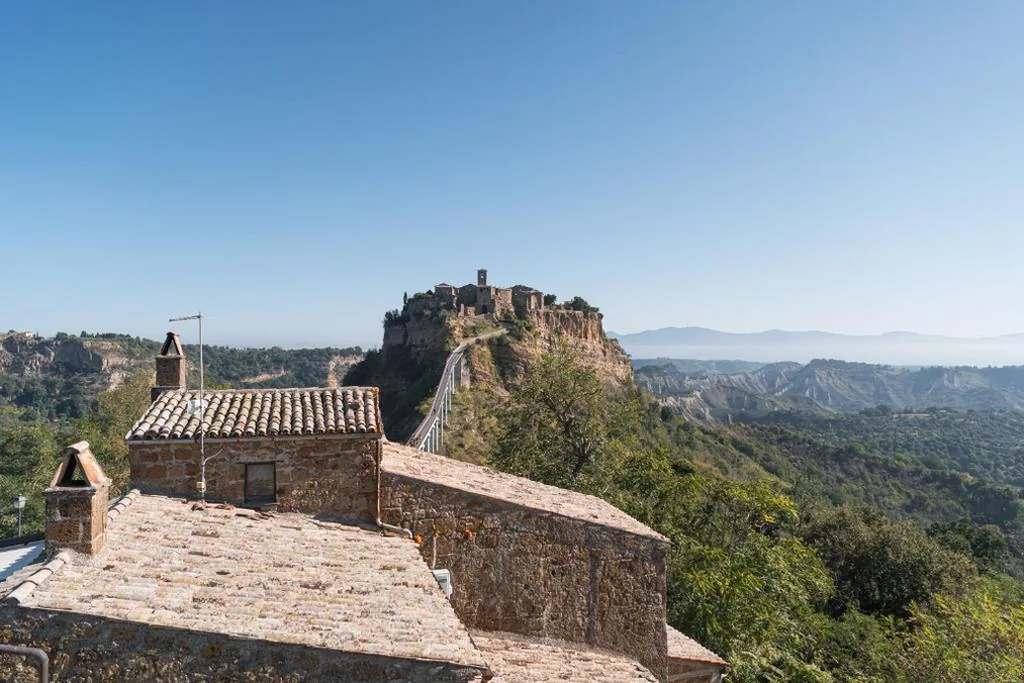
Acqua di Civita Beauty & Rooms Il Ponte
A couple of steps from the footbridge to Civita, with panoramic terraces over the badlands and a little spa to ease your legs after the climb to the village: convenience and a view at the same address. Air-conditioned rooms and parking, useful here where a car comes in handy. A solid base for a first taste of Tuscia.
All the small hotels in Bagnoregio →
Lake Bolsena: beaches, villages and evenings on the water
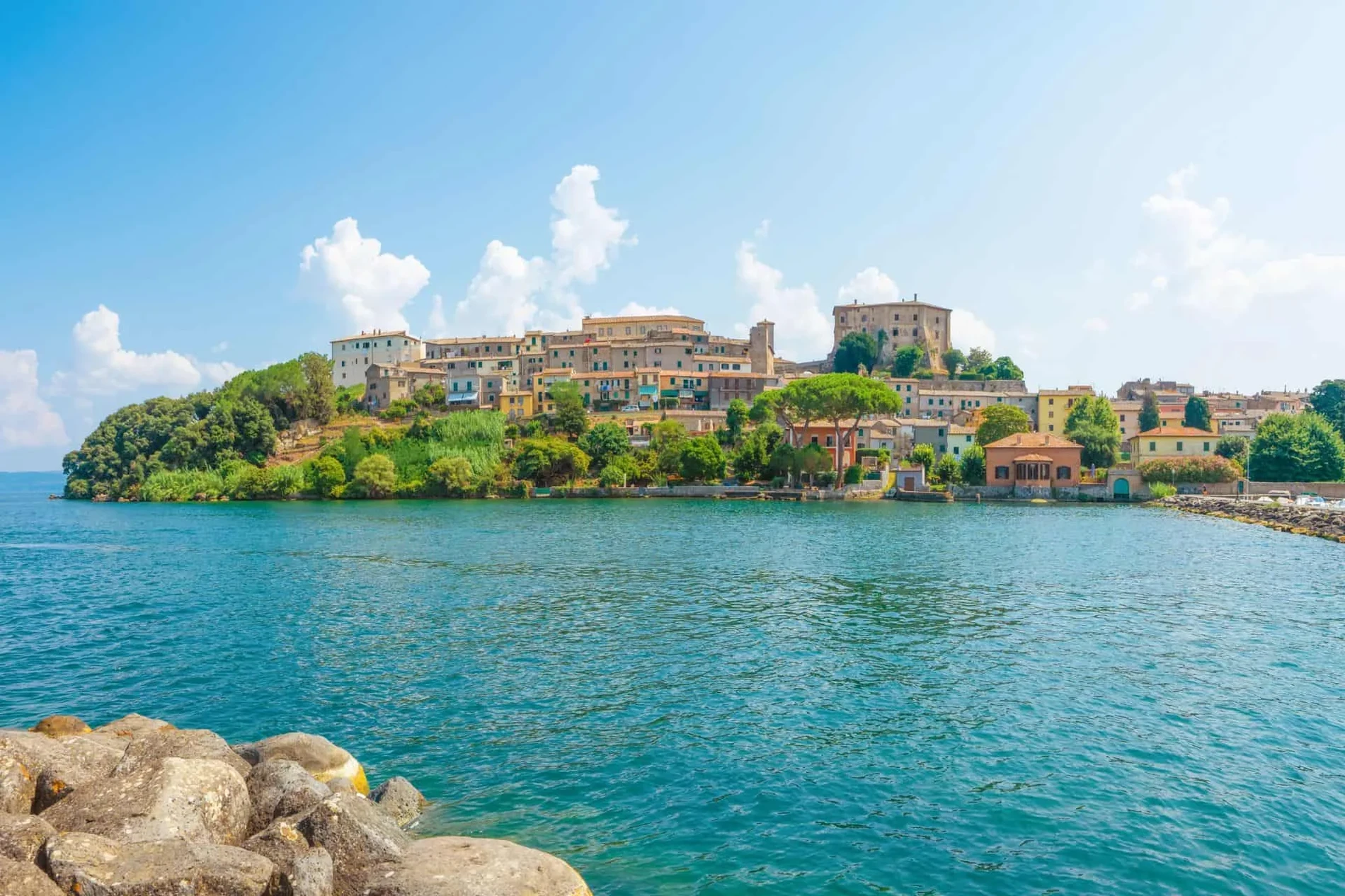
Lake Bolsena is the largest volcanic lake in Europe, and its shore is the gentlest side of Tuscia: sandy freshwater beaches, villages on the water and two islands at its centre. It’s the right area for families and for anyone after slow days rather than monuments.
The town of Bolsena, crowned by its castle and the basilica of Santa Cristina — tied to the Eucharistic miracle behind the feast of Corpus Christi — brings together history, a lakefront promenade and lake-fish restaurants. You can sleep well either in a holiday home or in a hotel, to taste:
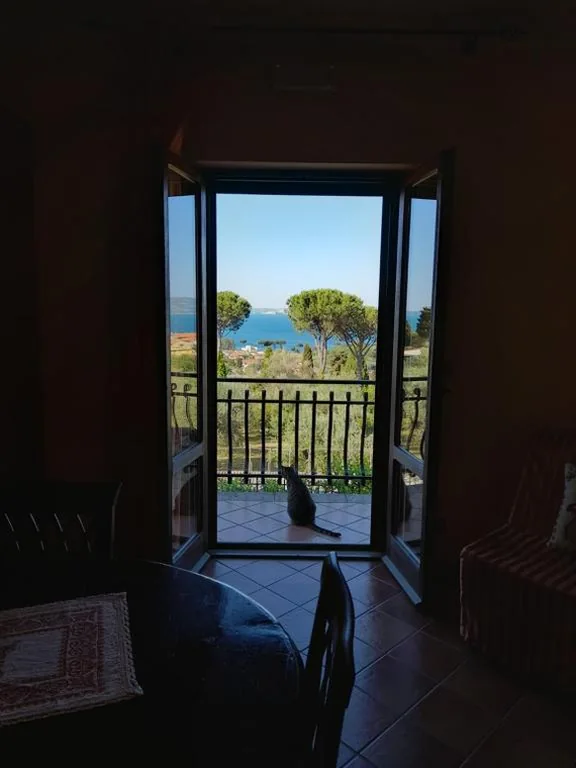
Casa Vacanze Antica Volsinii
Right on the lake shore, a self-contained house with a terrace over the water, a full kitchen and private parking: the right formula for those who want their own pace and evenings by the water. The space and independence of a home, minutes from the old town and the beach. Ideal for families and multi-night stays.
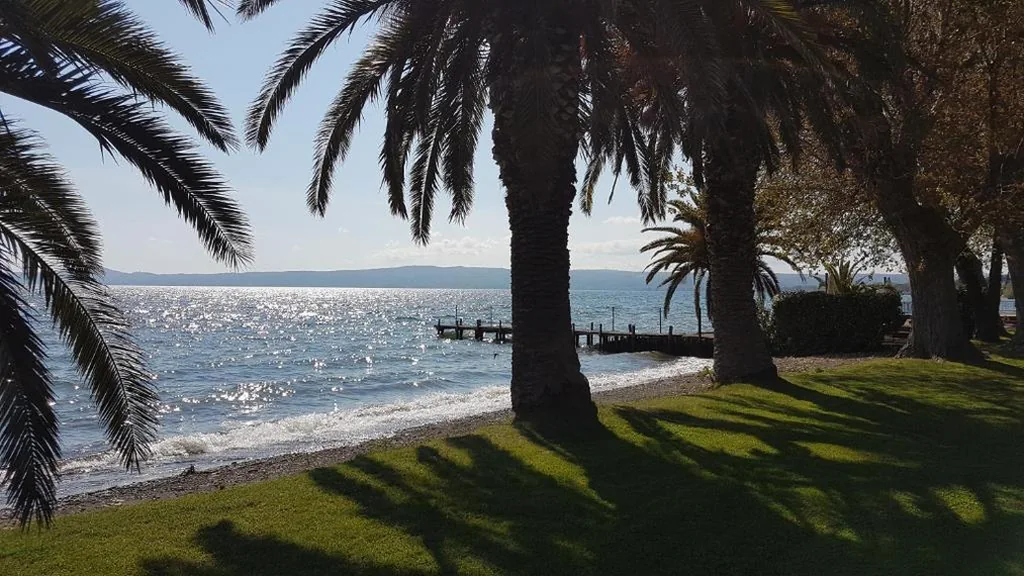
Hotel Eden Sul Lago
A four-star facing the water, for those who prefer the services of a hotel to self-catering: the ease of having everything laid on, with the lake in front of you. It’s the reassuring choice for families and couples who want the lake without a second thought, with Bolsena’s centre close by. The area’s classic comfort.
All the small hotels in Bolsena →
Tarquinia: Etruscans, medieval towers and a slice of sea
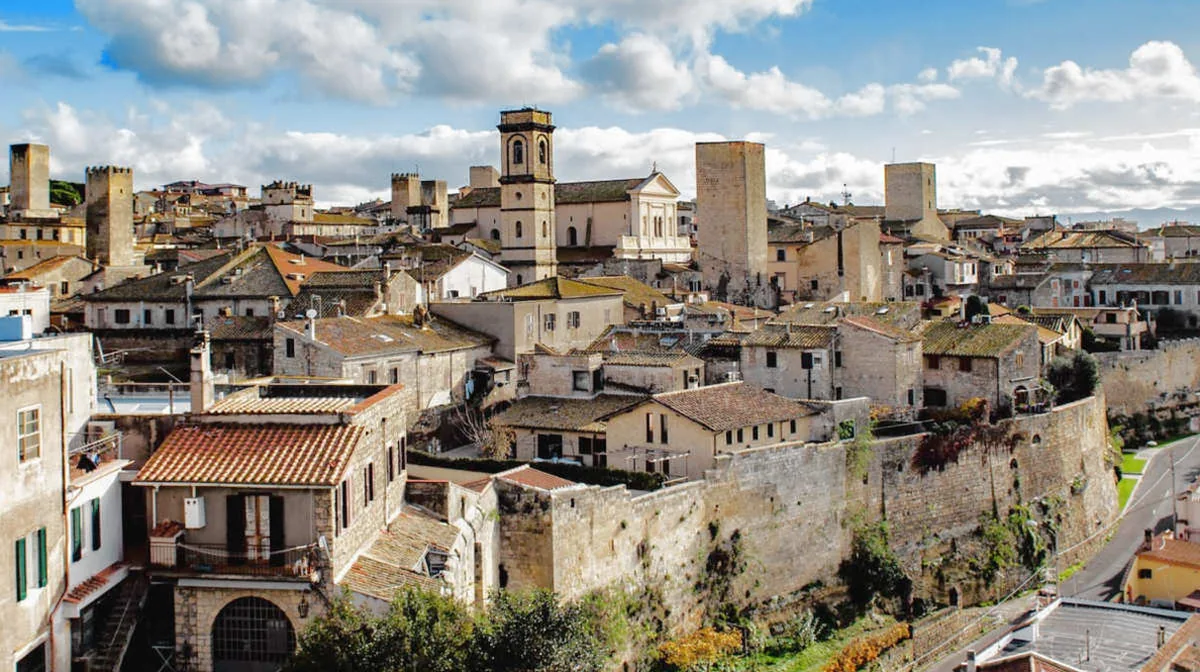
Tarquinia is two things at once: the Etruscan capital, with the Monterozzi necropolis and its painted tombs, a UNESCO World Heritage Site, and a handsome medieval town of towers and churches, with the National Etruscan Museum inside Palazzo Vitelleschi. And a few minutes away, the Lido for a swim.
It’s the ideal base for anyone who wants archaeology and the sea without choosing. Sleeping in the old town lets you enjoy it in the evening, once the day-trippers have left. The two we recommend within the walls:
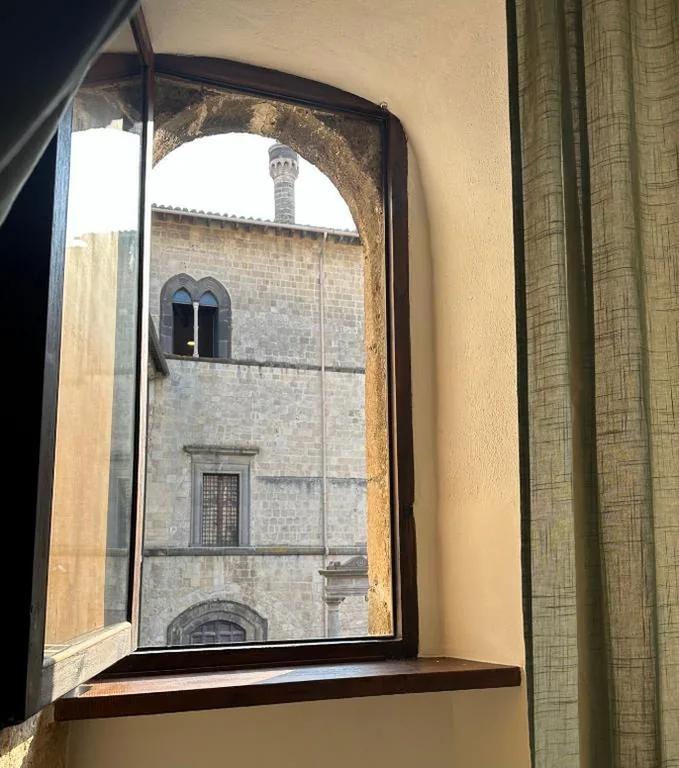
All’ombra del museo
In the old town, literally in the shadow of the Etruscan Museum at Palazzo Vitelleschi: a house with its own kitchen from which the necropolis, the towers and the restaurants are all on foot. Independence and position to live the town in the evening, once it empties out. Great for couples and small families who want to stay inside the history.
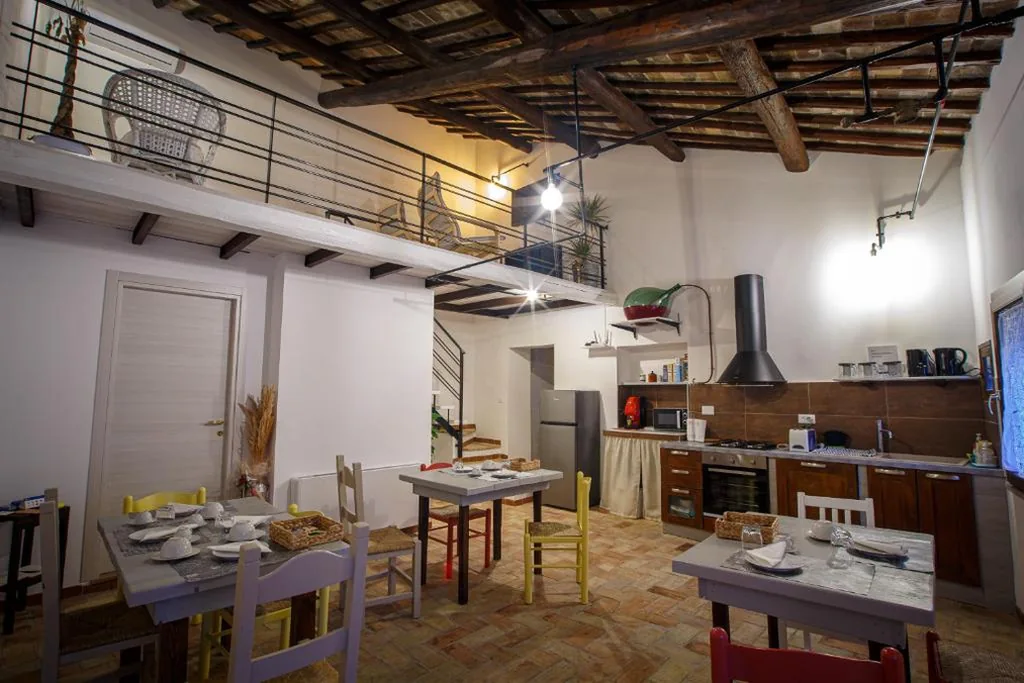
La Residenza dei Priori
A guest house in the medieval heart of Tarquinia, handy for exploring the centre and its churches on foot, with the Lido beach a few minutes away by car. Well-kept rooms and a hands-on welcome, the kind of place where they tell you where to eat well. For those after the Etruscan town with a touch more service.
All the small hotels in Tarquinia →
Montefiascone: the wine and the balcony over the lake
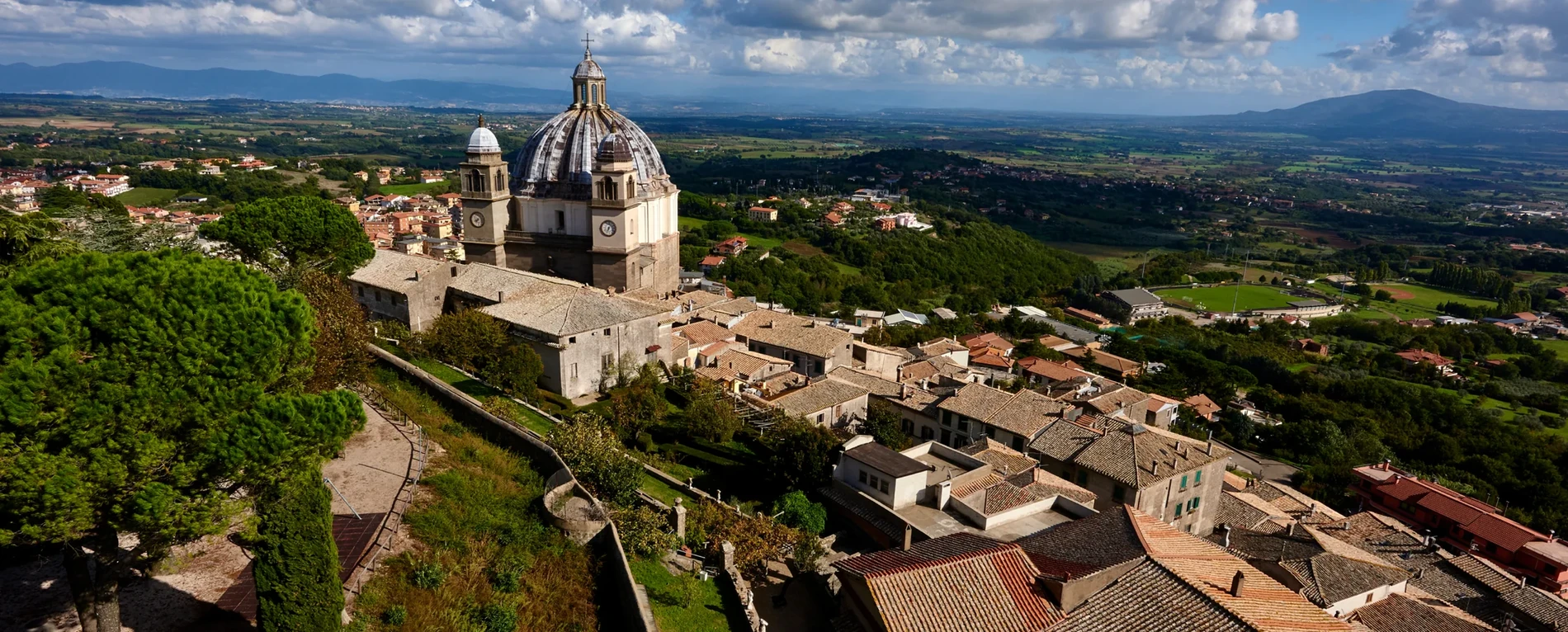
Clinging to the hill that overlooks the lake, Montefiascone offers one of the finest views in Tuscia and the home of Italy’s most curiously named wine, Est! Est!! Est!!!. Up top the Rocca dei Papi and the great dome of Santa Margherita, below the cellars and the vines; it’s also a stop on the Via Francigena.
It’s the choice for those who want countryside and wine with the lake in view, a notch quieter than the shore itself. The address we choose:
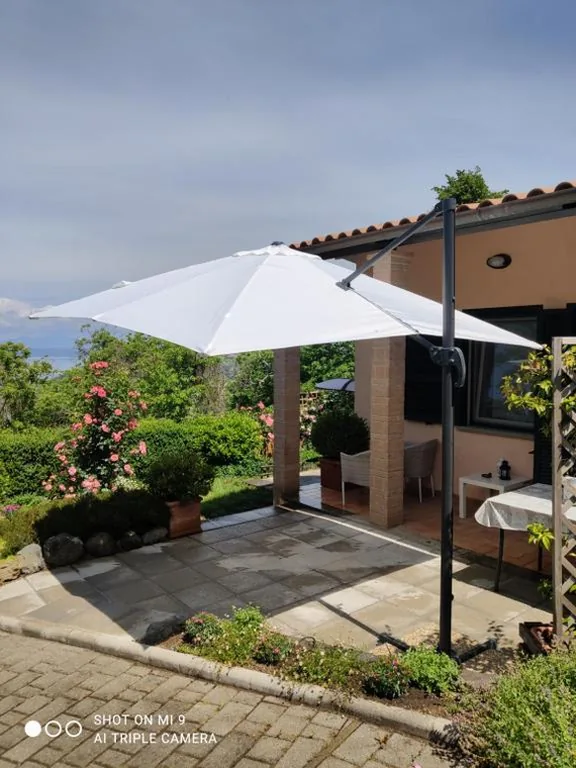
Un Giardino sul Lago
A house with a garden and a panoramic terrace facing Lake Bolsena: breakfast outdoors with a view and the Rocca dei Papi a couple of steps away. Space, quiet and one of the loveliest panoramas in the area, with a barbecue for summer evenings. Ideal for couples and families who want the countryside within reach of the lake.
All the small hotels in Montefiascone →
Sutri: the gateway to Tuscia coming from Rome
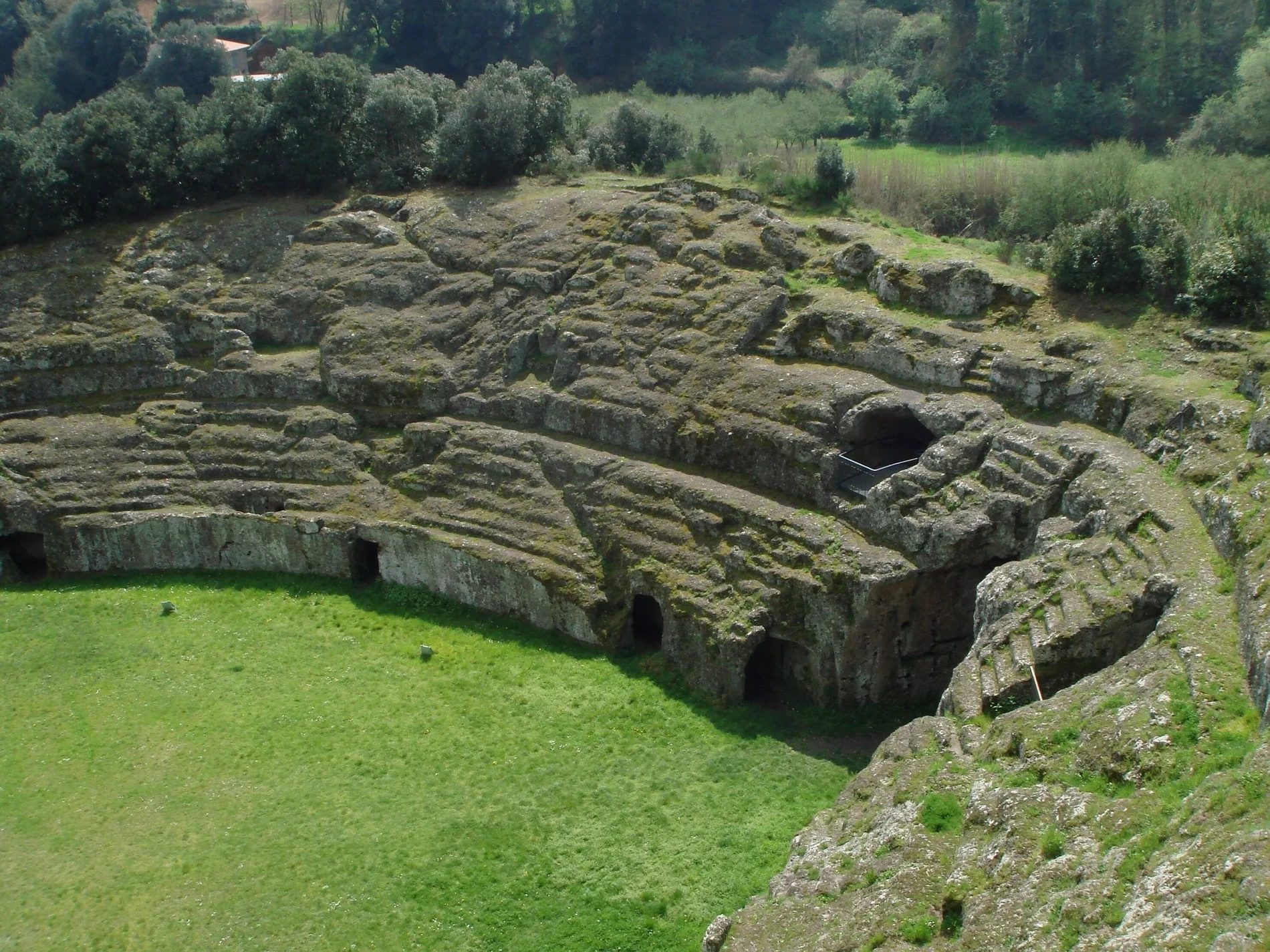
Sutri is the Tuscia closest to Rome, less than an hour up the Via Cassia, and it knows how to surprise: a Roman amphitheatre entirely carved into the tuff, a Mithraeum turned church, the archaeological park of the “ancient city” and a compact village on a spur of rock.
It’s the handy base for entering Tuscia from the south, or for a staging stop without heading back into the city. The address we choose in the centre:
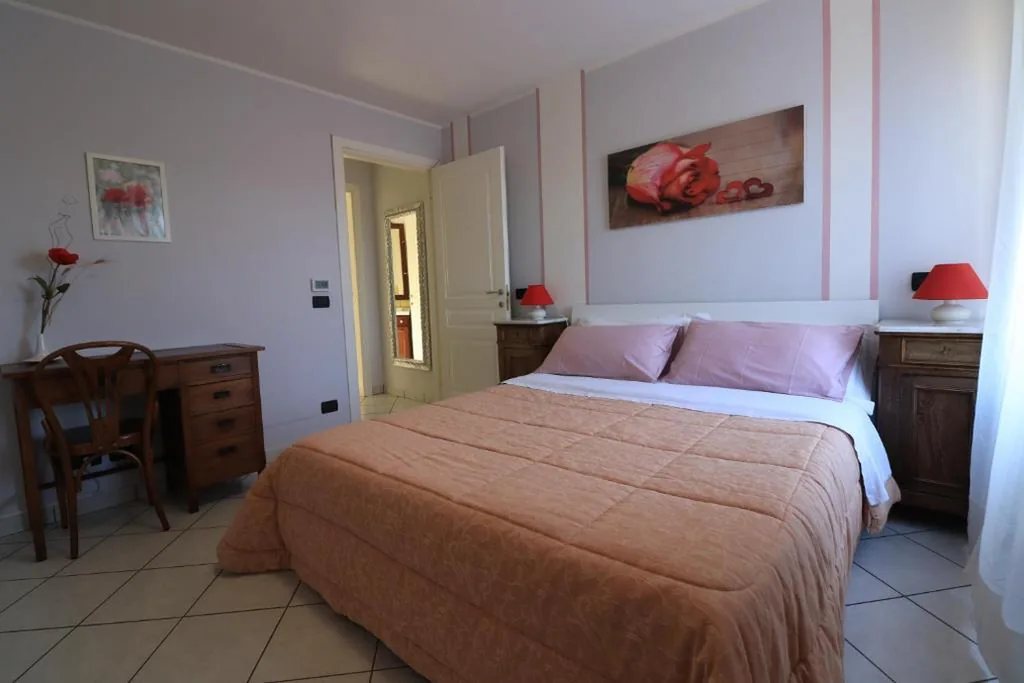
Platea Cavour
In the old town, a step from the amphitheatre in the tuff, a house with a patio and a full kitchen: the handy base for those entering Tuscia from the south, less than an hour from Rome. Independence and village calm, with the archaeological park at the gates. Perfect for a stopover or a slow weekend.
All the small hotels in Sutri →
The city base for all of Tuscia is still Viterbo, the city of the Popes, with its services and thermal springs: if you’d rather a city than a village, start there — where to stay in Viterbo. And if you’re arriving from the capital and want to pair the two, here’s where to stay in Rome.
When to go
Spring and autumn: the best time
These are the two ideal seasons: in spring the badlands turn green and the villages are warm and empty; in autumn come the grape harvest, the flavours and the finest light over the lake. The right weather for walking and gentler prices.
Summer
This is Lake Bolsena’s season: beaches, swims and cool evenings on the water. The stone villages heat up at midday, but the evenings breathe; keep in mind that Civita, in summer, is crowded at midday — one more reason to sleep nearby and enjoy it early or late.
Winter
Quiet and intimate: nativity scenes, wine cellars, silent villages and prices at their lowest. The choice for those after the most authentic Tuscia, allowing for the odd place closed for the season.
Getting there
By car is the way to live it: from Rome the Via Cassia climbs straight up towards Sutri and Viterbo; off the A1 motorway you exit at Orte for central Tuscia and at Orvieto for the northern quarter (Bolsena and Bagnoregio). It’s the means that ties together villages, lake and cellars.
By train coverage is partial: the Rome–Viterbo line serves Viterbo and the Sutri area well, but for Lake Bolsena, Bagnoregio and the scattered villages a car remains all but essential. Anyone arriving without one can look into hiring at the station.
For the full picture on trains, roads and getting around the region: getting around Rome and Lazio.
This guide is part of our grand tour of the region: discover every destination and area in Where to Stay in Lazio.
Frequently asked questions
Quick answers to the questions we’re asked most often about where to stay in Tuscia.
What’s the best base for visiting Civita di Bagnoregio?
Bagnoregio itself: sleeping in the village, you cross the bridge at dawn or dusk, when the “dying town” empties of day-trippers. It’s the only way to experience it without crowds, and it also puts you centrally for Lake Bolsena and the nearby villages.
Do I need a car to visit Tuscia?
Yes, it’s all but essential: the villages are close but scattered and the train only really serves Viterbo and the Sutri area. With a car, Tuscia becomes an itinerary through Civita, the lake, Tarquinia and the villas; without one, you’re limited to a handful of spots.
Where should I stay on Lake Bolsena with a family?
In Bolsena and Montefiascone: sandy freshwater beaches, houses with gardens and a few hotels facing the lake. It’s the most family-friendly area, with calm water, villages easy to explore and cool evenings even in summer.
Is it better to stay in Viterbo or in the villages of Tuscia?
It depends on the trip: Viterbo if you want a city with services, restaurants and thermal springs as a base; the villages — Bagnoregio, Bolsena, Tarquinia — if you’re after atmosphere and closeness to the landmark sights. Many combine the two, with a night in the city and one in the villages.
When is the best time to visit Tuscia?
Spring and autumn are the best for weather and scenery, grape harvest included; summer is ideal for Lake Bolsena. In any season it pays to book early: the places are small, often just a few rooms, and the most famous villages fill up fast.