
Friuli-Venezia Giulia is a small, well-connected region, set between the Adriatic sea, the Alps and the borders with Slovenia and Austria. Reaching it is simple — by air, train or car — and once you arrive the distances are short, which makes it easy to move between its very different souls: from the sea to the mountains, from art cities to the wine hills, often within an hour or two. Whether you want a base for the whole region or a tour between several areas, the connections are handy and well distributed. Here’s everything you need to know to plan the trip, with a link to our guide on where to stay in Friuli-Venezia Giulia, area by area.
By plane
The main airport is Trieste-FVG, at Ronchi dei Legionari, centrally placed between Trieste, Gorizia and Udine. Its great advantage is its own railway station, connected to the terminal, on the Venice-Trieste line: from the airport you carry on comfortably by train to the region’s cities, as well as by connecting buses.
For those arriving from abroad or looking for more flights, the airports of Venice and Treviso to the west are also handy, and — for the Tarvisio mountains — those across the border at Klagenfurt (Austria) and Ljubljana (Slovenia). From all of them you reach the region by car or public transport in reasonable times: from Venice, for example, Trieste is a little over an hour and a half by motorway or train.
From Trieste-FVG airport, besides the train, direct buses run to Trieste city, Udine and Gorizia, handy for those who don’t want to change transport. It’s the right airport if your trip revolves around the region, while Venice is worth it if you pair Friuli with a stop in Veneto.
By train: the cities and the Venice-Trieste line
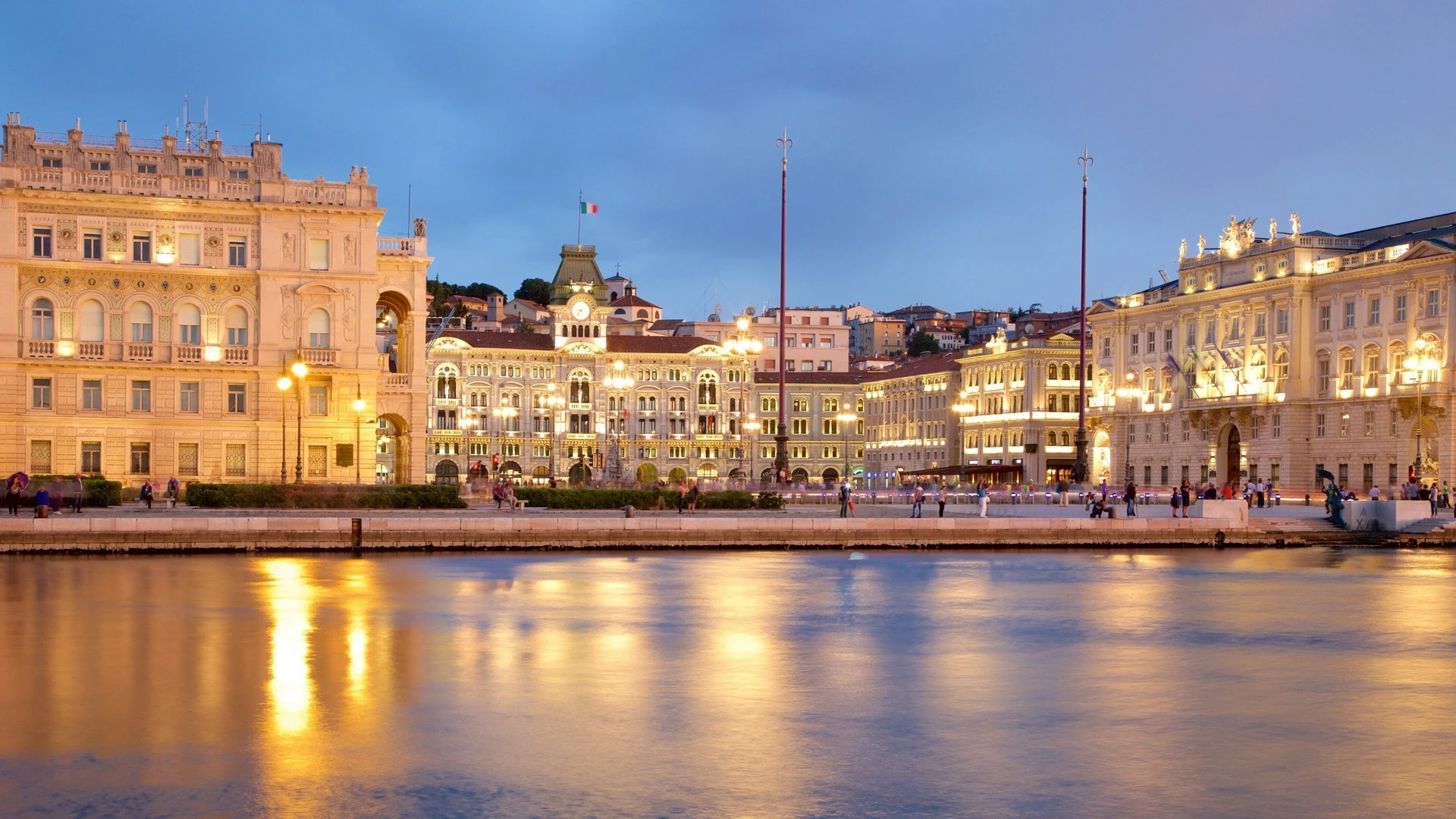
The train is the best way to reach and connect the cities. The Venice-Trieste line serves Portogruaro, Latisana, the airport and Monfalcone all the way to Trieste, while Udine is the region’s great railway hub, with connections towards Venice, Trieste, Gorizia and, to the north, the line that climbs to Tarvisio and Austria (Villach). Pordenone too is on the route to Venice, and Gorizia is served by the network, with nearby Nova Gorica reachable on foot across the border.
Some destinations need the last stretch by bus: Cividale del Friuli is the exception, since it’s reached by train on the short direct line from Udine (about a quarter of an hour); Grado is reached instead from the Cervignano-Aquileia-Grado station by bus, and Lignano Sabbiadoro from the Latisana station. These are all handy connections, frequent in high season.
The train is useful for border crossings too: from the Tarvisio mountains you carry on towards Villach, in Austria, while from Gorizia nearby Nova Gorica is the rail gateway to Slovenia. For the city-by-city picture of connections, see our guides on Trieste and Udine.
By car
The motorway network covers the region well. The A4 (Venice-Trieste) is the main axis crossing the plain from west to east; the A23 climbs from Palmanova towards Udine, Tarvisio and the Austrian border; the A28 links Portogruaro to Pordenone and Conegliano, serving western Friuli; the A34 connects Villesse to Gorizia.
A car is especially useful for the areas that public transport reaches less thoroughly: the coast away from the stations, the hills of the Collio around Gorizia and Cormons, and above all the mountains, where the villages of Tarvisio and Carnia are scattered across the valleys. The region borders Slovenia and Austria, and crossings are easy and barrier-free.
Internal distances are short: from Trieste to Udine is under an hour, and in about two hours you go from the sea to the slopes of the Tarvisio area. In the cities it’s worth bearing in mind the restricted traffic zones and looking for parking at the edge of the old centres, while in winter, for the mountains, winter tyres or chains on board are useful.
Getting around
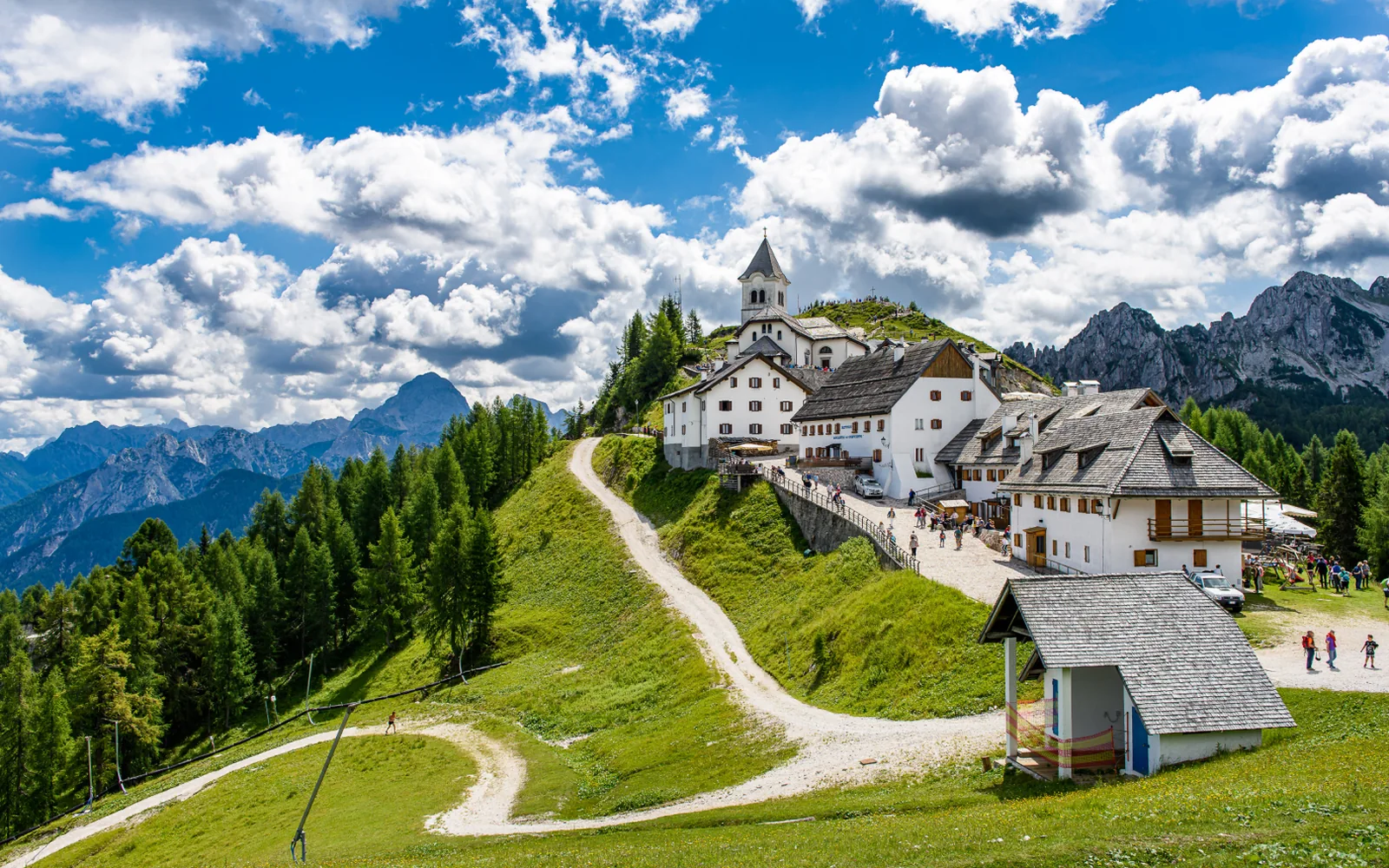
How to get around depends on the area. For the cities — Trieste, Udine, Gorizia, Pordenone — the train and your feet are almost always enough, and a car in the centre is more of a problem than a convenience. For the sea, Lignano and Grado are wonderfully explored by bike, with long cycle paths and flat terrain; at Grado and in the lagoon there are also boats for trips to the island of Barbana and the village of Marano. In the mountain resorts, in winter, ski buses link the villages to the lifts, handy for those who don’t want to move the car every day.
For the Collio and the mountains, instead, a car is the best choice, because cellars, villages and ski areas are spread across the territory. A special mention goes to the Alpe Adria Cycle Path, which links Salzburg to Grado passing through Tarvisio, Udine and the plain: in summer it’s a splendid, scenic way to discover the region by bike, from the Alps to the sea, with gently downhill stretches and rental services along the route.
Decided how to get there? Now choose where to stop: browse the complete guide where to stay in Friuli-Venezia Giulia, with all the areas and the small hotels hand-picked one by one.
Frequently asked questions
Quick answers to the questions we’re asked most about how to get to Friuli-Venezia Giulia.
What is the airport of Friuli-Venezia Giulia?
It’s Trieste-FVG airport, at Ronchi dei Legionari, centrally placed between Trieste, Gorizia and Udine, with a handy railway station connected to the terminal. For more flights or from abroad, the airports of Venice and Treviso to the west are also useful, while for the Tarvisio area Klagenfurt and Ljubljana, across the border, may be worthwhile.
How do you get to Friuli-Venezia Giulia by train?
The Venice-Trieste line serves the coast and Trieste, passing through the airport and Monfalcone. Udine is the great railway hub, with connections towards Venice, Trieste, Gorizia and the Tarvisio mountains (as far as Villach, in Austria). Pordenone and Gorizia are well served too; for Cividale, Grado and Lignano the last stretch is by bus.
Do you need a car in Friuli-Venezia Giulia?
For the cities, no: Trieste, Udine, Gorizia and Pordenone are easily explored on foot and by train. A car becomes very useful for the coast away from the stations, for the hills of the Collio and above all for the mountains of Tarvisio and Carnia, where the villages are scattered across the valleys. In those cases it gives much more freedom of movement.
How do you get to Lignano and Grado?
Lignano Sabbiadoro is reached by train to Latisana and then by bus, or by car from the Latisana exit of the A4. For Grado you get off at the Cervignano-Aquileia-Grado station and continue by bus, or by car through Aquileia. Both resorts are also handy by bike, thanks to the coastal cycle paths.